
The standard pitch for AI augmentation promises that clinicians will work smarter. That promise misses the actual problem. Clinicians in behavioral health are already the most skilled people in the room.
The problem is not clinical capability. Clinicians spend an estimated 40 to 60 percent of their day on documentation, intake coordination, and administrative tasks that have nothing to do with clinical care. The burden is not cognitive. It is structural.
AI augmentation, applied correctly, does not sharpen a clinician's judgment. It removes the work that should never have reached them in the first place. That is a workforce decision, not a software feature.
Understanding that distinction determines whether AI augmentation actually expands clinic capacity or simply adds another tool for an already overloaded team.
The Standard Definition of AI Augmentation Gets Behavioral Health Wrong
What "AI Augmentation" Means in Most Industries
In most industries, augmented intelligence describes AI that supports human decision-making. The human analyzes; AI provides faster data, better pattern recognition, or reduced cognitive load during complex choices. That model fits fields where the bottleneck is analytical throughput.
Behavioral health is not that field. A licensed psychiatrist or therapist does not need AI to help them diagnose or treat. Their clinical training already handles that.
Why That Definition Does Not Transfer to Clinical Settings
The expert-practitioner gap matters here. When AI augmentation is designed to enhance decision-making, it assumes the human needs help thinking. A clinician with years of specialized training does not. The actual gap is capacity, not capability.
Clinicians spend an estimated 40 to 60 percent of their day on documentation, intake coordination, and administrative tasks unrelated to care. That is not a skills problem. It is a task-allocation problem.
Context-switching from a trauma intake session to an insurance prior-authorization form is not inefficiency. It is a system design failure. The cognitive cost of that shift falls entirely on the clinician, every time.
The Real Question for Clinic Owners: Who Should Own This Task?
For behavioral health clinics, augmentation is not about capability. It is about task ownership. Before deploying any AI tool, the right question is not "will this help my clinician complete this task?" The right question is: "should this task reach my clinician at all?"
That reframe changes which problems AI is asked to solve. It moves the conversation from software features to workforce architecture.
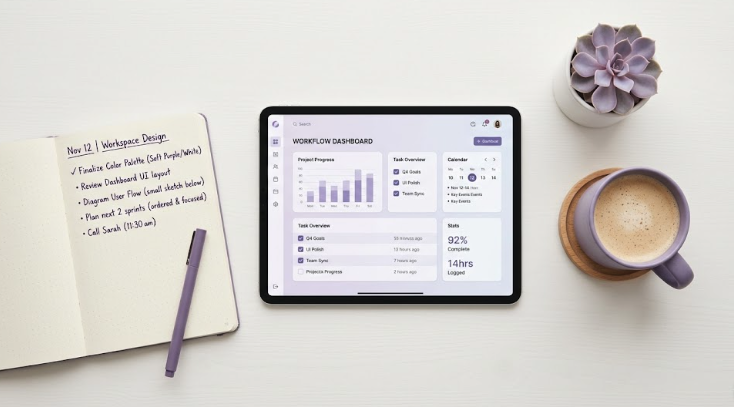
What Gets Removed From the Clinician's Plate, and What Fills That Layer Instead
Augmenting the Clinician vs. Augmenting the Workforce Around Them
Two models exist for deploying AI in a clinic. The first places AI beside the clinician, a tool they use to complete tasks faster. The second builds a parallel operational layer that intercepts administrative work before it reaches the clinician at all.
The second model delivers greater capacity gains. It does not depend on clinician adoption or workflow change. It removes the work from the clinical layer entirely.
Three Task Categories That Should Never Touch a Clinician's Calendar
- Clinical documentation: Session notes, treatment summaries, and progress documentation consume hours each week. AI handles generation and structuring so clinicians review rather than write from scratch.
- Patient intake screening: Initial screening calls, eligibility checks, and provider matching require coordination staff, not clinical judgment. AI handles this layer around the clock.
- Claims processing: Billing errors and incomplete claims delay revenue. AI processes and flags claims without pulling administrative staff away from patient-facing work.
How mdhub Builds the Parallel Operational Layer
The mdhub Clinical Assistant saves clinicians up to 2 hours per day on AI clinical documentation. It generates structured notes from sessions so clinicians spend minutes reviewing, not hours writing.
The mdhub Admissions Coordinator handles 24/7 patient screening and provider matching. It removes intake coordination from clinical staff entirely, using AI admissions coordinators instead of adding headcount. Talkiatry and Amen Clinics have deployed this model at behavioral health scale. mdhub's AI workforce platform reduces operational costs by up to 50% while increasing patient intake by 30%.
Running a solo or small practice? Start a free trial.
The Operational Cost of Delaying AI Augmentation in a Behavioral Health Clinic
How Admin Overload Becomes a Retention Problem
Admin overload compounds quickly. Clinicians who spend half their day on documentation and intake coordination experience a widening gap between the clinician they trained to be and the data-entry role the system has made them fill. That gap drives clinician burnout.
Burnout leads to turnover, and turnover is expensive. Recruiting costs, onboarding lag, and lost revenue per vacant slot are not abstract risks. They land on the owner's books every time a clinician exits.
The Intake Ceiling No One Talks About
Clinic growth stalls not from lack of patient demand but from the ceiling of what an exhausted human team can manually process. Every intake form routed to a clinical staff member, every prior-auth pulled together by a therapist, and every scheduling call fielded by a provider is a unit of capacity consumed outside of patient care.
The intake ceiling is set by administrative friction, not by patient demand. Remove the friction and the ceiling rises without hiring.
HIPAA Compliance in a Parallel AI Workforce Model
Clinic owners will ask about compliance before they sign anything. That is the right question. A parallel AI operational layer in behavioral health must meet the same HIPAA standards as the clinical layer. HIPAA compliance is a baseline requirement for any AI platform handling patient data, not a premium feature. Verify that any vendor operates under a signed Business Associate Agreement and maintains appropriate data security controls before deployment.
The question is not whether AI can be compliant. It is whether a given vendor has built compliance into their architecture from the start. That distinction narrows the field quickly.
The decision point for most clinic owners is not whether to adopt AI augmentation. It is how long they can afford to delay it while their team absorbs work that belongs in a separate operational layer.
Streamline Your Practice
The friction this article addressed is concrete: clinicians losing hours every day to documentation and intake work that was never theirs to own. The mdhub Clinical Assistant eliminates documentation overhead so clinicians review notes instead of writing them. The mdhub Admissions Coordinator handles patient intake around the clock without adding headcount. Both agents operate in a parallel layer that intercepts administrative work before it reaches your clinical staff. If you want to see how that operational layer functions in a behavioral health setting, book a demo at mdhub.
Most clinics redeploy rather than displace. Staff who previously handled intake calls or documentation coordination shift toward patient-facing coordination, billing resolution, and quality assurance work that requires human judgment. The parallel AI layer removes repetitive, high-volume tasks. It does not eliminate the need for staff who manage exceptions, relationships, and complex cases. The outcome in most deployments is that existing staff handle higher-value work rather than exit the organization.
AI augmentation platforms that handle protected health information must operate under a signed Business Associate Agreement with your clinic. Verify that the vendor encrypts data in transit and at rest, limits data retention, and has undergone a third-party security audit. Ask specifically whether their platform was architected for healthcare from the start or adapted from a general-purpose product. Compliance is a baseline, not a differentiator, so any reputable vendor should answer these questions without hesitation.
A parallel AI operational layer integrates with your existing EHR rather than replacing it. The AI agents handle task interception, screening calls, generating documentation drafts, processing intake data, and pass outputs into the EHR your clinicians already use. Replacing your EHR is a separate and much larger project. Clinics that deploy mdhub do so alongside their current systems, which means implementation does not require a platform migration before value is realized.